
Smart Light Fixtures with LoRa and ZigBee Control: How AUTEX Maximizes Municipal Energy Savings
YANGZHOU, JIANGSU, CHINA, October 29, 2026 /EINPresswire.com/ -- Municipal roadway lighting infrastructure represents
Press Release Disclaimer: This is a press release distributed through the XPR Media network. It has not been independently verified by our newsroom.
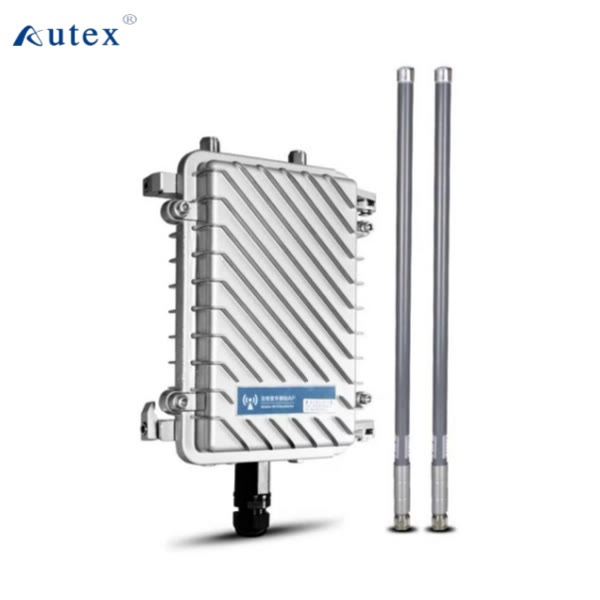

YANGZHOU, JIANGSU, CHINA, October 29, 2026 /EINPresswire.com/ — Municipal roadway lighting infrastructure represents one of the most substantial ongoing electrical expenditures for modern metropolitan districts, regularly consuming between 30% and 40% of public municipal power budgets. Conventional roadway lighting grids predominantly depend on static photoelectric sensors, mechanical time-switch relays, or manual distribution circuit breakers. These legacy control architectures enforce unadjusted, full-power luminaire operation during low-density midnight transit hours, incur high operational costs for physical line patrol trucks, and offer no real-time telemetry into phase imbalances, current anomalies, or cable status. Upgrading municipal illumination to responsive, intelligent networks requires a specialized long-range wireless communication backbone engineered to overcome physical urban signal obstruction without generating recurring commercial cellular data subscription overhead. Established in 2006, AUTEX engineers complete intelligent street lighting systems, pairing high-efficiency optical luminaires with its industrial smart lighting LoRaWAN communication gateway and intelligent single-lamp controllers to optimize municipal electrical efficiency through automated sensor telemetry, precise electrical monitoring, and dynamic illumination scheduling.
Long-Range Wireless Penetration and Urban RF Interference Challenges
Deploying networked street lighting across extensive urban territories presents demanding radio frequency communication challenges. High-density reinforced concrete structures, multi-layered transportation flyovers, dense street vegetation, and intense industrial electromagnetic fields create severe multipath reflections, signal attenuation, and co-channel interference. Short-range wireless consumer protocols, such as standard 2.4 GHz Wi-Fi or unamplified ZigBee mesh arrays, exhibit rapid path loss and limited transmission distances in outdoor roadway environments. In dense municipal road grids, such protocols necessitate numerous intermediate repeater nodes that compound system latency and increase vulnerability to localized transmission dropouts. Conversely, outfitting every independent light pole with a dedicated 4G LTE cellular transceiver incurs substantial monthly SIM card subscription fees, introduces recurrent firmware maintenance overhead, and imposes steady standby electrical loads across tens of thousands of distributed lighting poles. Overcoming these limitations requires an industrial-grade Sub-1GHz wireless network topology that unites high obstacle penetration, ultra-low standby power consumption, license-free industrial band deployment, and centralized gateway management.
Industrial GW-R Concentrator Architecture and Multi-Band Adaptive Modulation
To mitigate urban signal attenuation and streamline municipal network coordination, the AUTEX GW-R intelligent lighting communication gateway employs specialized Sub-GHz LoRa chirp spread spectrum technology. Engineered with multi-region frequency agility, the concentrator supports programmable operating bands spanning 433MHz, 470MHz, and 510MHz frequencies, aligning with regional wireless regulatory frameworks across international installations. Through spread spectrum modulation and cyclic error correction coding, the GW-R gateway processes concurrent low-bitrate data packets across multiple orthogonal frequency channels, maintaining packet reception integrity in radio environments saturated by ambient industrial noise. For wide-area uplink connectivity, the gateway integrates an industrial 10/100M RJ45 Ethernet interface alongside embedded 2G, 3G, 4G, and Wi-Fi communication modules. This redundant dual-link backhaul architecture enables automatic network failover, transmitting real-time field-level lighting data directly to municipal cloud control software via standard, lightweight UDP, TCP, and MQTT messaging protocols.
20dBm Transmit Power and -136dBm Receiver Sensitivity Engineering
Radio frequency performance across the AUTEX LoRa ecosystem is driven by high-efficiency power amplification circuitry and an ultra-sensitive receiver front-end. The GW-R gateway concentrator delivers an adjustable radio frequency output power of up to 20dBm (100mW), coupled with an advanced receiver sensitivity rating exceeding -136dBm. This expansive link budget allows a single centralized gateway unit to maintain stable bidirectional communication over a 2-kilometer radius within dense metropolitan street grids and up to a 15-kilometer line-of-sight range across open suburban expressways and industrial logistics zones. Downstream single-lamp controllers installed on standard NEMA ANSI C136.41 or Zhaga Book 18 socket receptacles communicate with the concentrator via localized LoRa or ZigBee links. Equipped with standard 0-10V and PWM dimming output interfaces, each controller continuously reports operational parameters, including root-mean-square voltage, load current, active power factor, accumulated kilowatt-hours, and internal driver temperature, establishing deterministic visibility across hundreds of distributed streetlights per gateway node.
Full-Duplex Concurrency, 3KV Surge Immunity, and Offline Autonomous Strategy Execution
Outdoor municipal infrastructure subjects electrical management devices to wide ambient temperature swings, unstable distribution line voltages, and atmospheric electrical surges. The GW-R gateway concentrator is housed in a weather-sealed industrial enclosure and features an ultra-wide universal power supply accepting AC85V to 265V at 50/60Hz, while maintaining an active operating power draw of less than 3W. The internal electronics operate reliably across temperature conditions ranging from -40 degrees Celsius to +85 degrees Celsius and integrate 3KV lightning and electrical fast transient surge protection circuitry. To prevent operational interruptions caused by external carrier network outages or municipal server disconnections, the gateway incorporates onboard non-volatile memory and a temperature-compensated hardware real-time clock (RTC). Complex municipal lighting strategies, astronomical calendar twilight tables, ambient lux thresholds, and multi-stage dimming curves remain stored directly within local hardware memory, enabling uninterrupted autonomous control execution independent of active internet connectivity.
50% to 80% Quantifiable Energy Savings and Centralized Asset Governance
Integrating AUTEX LoRa and ZigBee smart lighting controls converts conventional passive roadway lighting into an active, data-driven municipal energy management network. Automated dynamic dimming schedules, such as delivering 100% luminous flux during evening rush hours, reducing output to 40% or 50% during low-traffic midnight hours, and elevating levels to 70% during early morning commute intervals, achieve measurable secondary electrical savings between 50% and 80% compared with unmanaged constant-output systems. Dynamic current reduction also lowers internal junction temperatures within luminaire LED packages and power conversion circuits, decelerating lumen depreciation and extending total luminaire operational life beyond 50,000 operational hours. Centralized monitoring platforms provide instant notifications for physical cable severance, lamp open circuits, power factor abnormalities, and unauthorized electrical tapping, replacing slow periodic visual road inspections with targeted, condition-based maintenance dispatches.
To evaluate technical datasheets, LoRa gateway concentrator communication protocols, and project-specific smart street lighting control architectures, please access our engineering resources via our international portal.
Official Portal: https://www.autexsolar.com/
Yangzhou Autex Solar Technology Co., Ltd.
AUTEX
Visit us on social media:
Instagram
Facebook
YouTube
Legal Disclaimer:
EIN Presswire provides this news content “as is” without warranty of any kind. We do not accept any responsibility or liability
for the accuracy, content, images, videos, licenses, completeness, legality, or reliability of the information contained in this
article. If you have any complaints or copyright issues related to this article, kindly contact the author above.

Media gallery
